
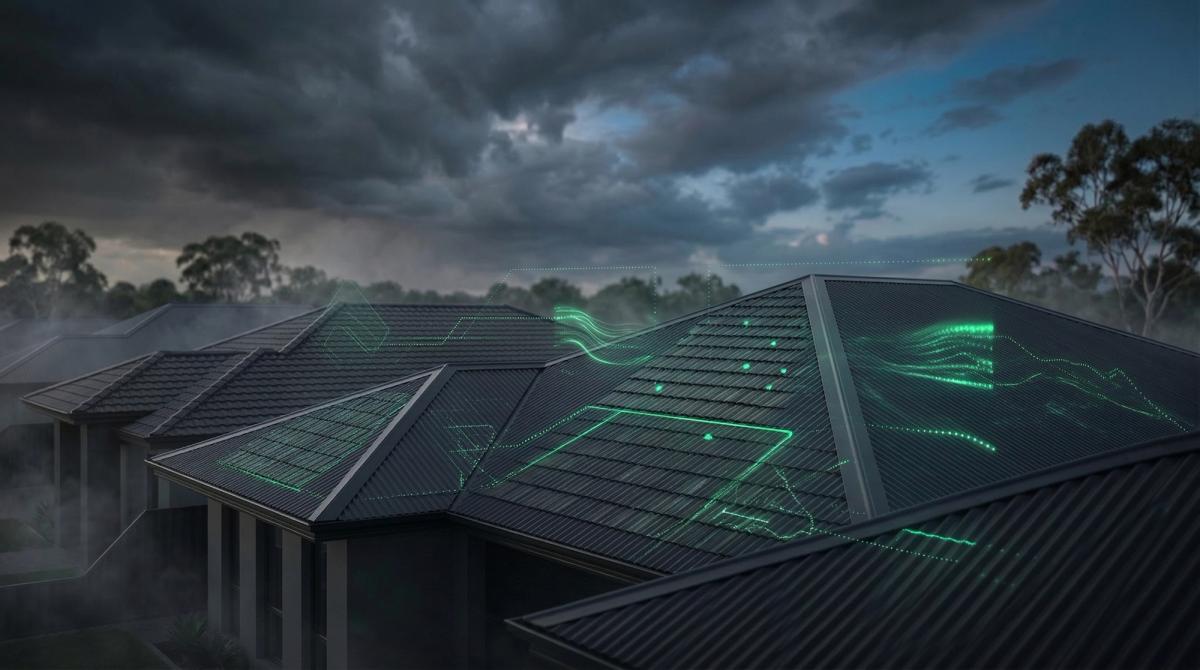
Hailstorms are one of the most common causes of roof damage in Victoria. While large hailstones obviously shatter tiles and dent metal sheeting, even moderate hail can cause subtle damage that degrades your roof over time. Understanding what to look for — and when to call in a professional — can save you thousands in preventable repairs.
How Hail Damages Different Roofing Materials
Concrete and Terracotta Tiles
Hailstones striking concrete or terracotta tiles can cause hairline fractures that are invisible from the ground. These micro-cracks allow water to seep through during subsequent rainfall, leading to ceiling stains, timber rot in the roof frame, and eventually mould growth in the ceiling cavity. Larger hailstones — common during Melbourne's spring and summer severe weather events — can crack tiles outright or chip edges, breaking the waterproof seal between overlapping tiles.
Metal Roofing (Colorbond and Zincalume)
Metal roofs dent rather than crack, but that does not mean the damage is merely cosmetic. Dents compromise the protective coating on Colorbond and Zincalume sheeting, exposing the base metal to moisture and accelerating corrosion. Over time, these dented areas become weak points where rust perforates the sheet entirely.
Gutters and Downpipes
Gutters cop the worst of it during a hailstorm. Dented gutters lose their fall — the slight gradient that directs water towards downpipes — causing pooling, overflow, and water ingress at the fascia line. Cracked or split gutter joints allow water to run down external walls and into the subfloor area.
Hidden Signs of Hail Damage
The most dangerous hail damage is the damage you cannot see from the street. After a significant hailstorm, watch for these warning signs in the days and weeks that follow:
- •New water stains on ceilings or walls, particularly after rainfall.
- •Granules from tile coatings accumulating in gutters — a sign that the tile surface has been compromised.
- •Dented or cracked ridge capping along the roof peak.
- •Damaged or displaced lead flashing around chimneys, vents, and skylights.
- •Cracked or shattered skylights — hail can weaken polycarbonate or glass skylights without fully breaking them.
- •Increased noise from the roof during rain, which can indicate loosened or cracked tiles.
Why Professional Inspection Matters
A qualified roof inspector can identify damage that is impossible to spot from ground level. At Oxide Construct, our assessors use systematic inspection methods to check every section of the roof, including areas homeowners typically overlook — behind solar panels, under satellite dishes, and at the junction between different roof planes.
For insurance purposes, a professional inspection report carries significantly more weight than homeowner photos alone. The report documents the hail impact pattern, identifies all affected areas, and provides the detailed scope of works your insurer needs to process the claim efficiently.
Insurance Claim Timeline for Hail Damage
Under Australian insurance regulations, you should lodge your claim as soon as reasonably practicable after discovering the damage. Most policies have a reasonable timeframe, but delaying a claim can complicate the process — particularly if subsequent weather events cause additional damage to an already compromised roof.
Key tip: If your area has experienced a declared catastrophe event, insurers are required to prioritise claims and fast-track assessments. Check the Insurance Council of Australia's disaster information page for current declarations.
Do not wait for the next storm to reveal hidden hail damage. If your property was in the path of a significant hailstorm, arrange a professional inspection sooner rather than later. Early detection means a cleaner claim process and a faster return to a fully weatherproof home.